Manufacturing companies have always relied on trade shows, referrals, distributors, and cold outreach to generate new business. While these methods still work, they are no longer enough to build a predictable sales pipeline.
Today's manufacturers need a faster and more scalable way to identify potential customers. That's where AI-powered lead generation comes in.
Instead of spending hours researching companies, searching LinkedIn, or buying outdated contact lists, Artificial Intelligence helps manufacturers discover high-quality prospects that match their Ideal Customer Profile (ICP).
In this guide, you'll learn how AI lead generation for manufacturing companies works, why it's transforming manufacturing sales, and how your business can use it to generate more qualified B2B opportunities.
For foundational concepts, see our guides on B2B lead generation, ICP identification, and finding decision-makers.
What Is AI Lead Generation?
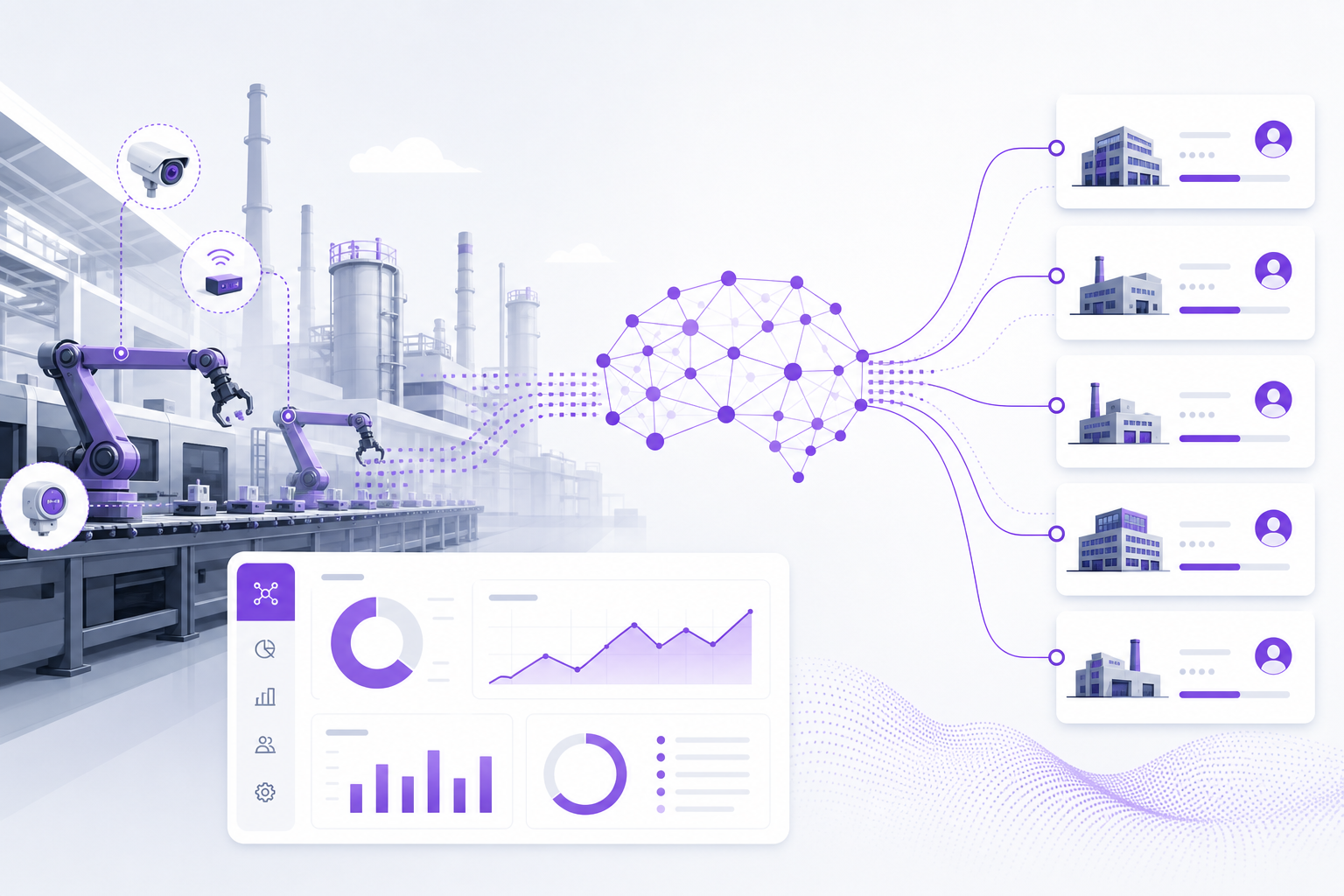
AI lead generation uses Artificial Intelligence to automate and improve the process of finding potential customers.
Instead of manually searching for companies, AI analyzes multiple business signals to identify organizations that closely match your ideal buyers.
Modern AI can help manufacturers:
- Discover qualified companies
- Identify decision-makers
- Analyze company fit
- Prioritize high-value prospects
- Reduce manual research
- Build targeted outreach lists
The result is a smarter, faster, and more efficient sales process.
Why Traditional Lead Generation No Longer Works
Many manufacturing companies still depend on methods such as:
- Trade exhibitions
- Referrals
- Purchased databases
- Cold calling random companies
- Generic email campaigns
- B2B marketplaces
While these approaches can generate leads, they often create problems such as:
- Low-quality prospects
- Outdated contact information
- Long research time
- Poor email response rates
- High customer acquisition costs
- Unpredictable sales pipelines
Manufacturers need a more data-driven approach.
Why Manufacturing Companies Are Adopting AI
Manufacturers operate in highly specialized markets. Every company has different requirements based on:
- Products manufactured
- Industry served
- Factory size
- Geographic market
- Production capacity
- Supply chain requirements
- Purchase volume
AI helps identify businesses that actually fit these criteria instead of generating random company lists. This dramatically improves lead quality.
What Makes a High-Quality Manufacturing Lead?
A qualified manufacturing lead should include:
- Company profile
- Industry
- Manufacturing segment
- Products manufactured
- Company size
- Revenue estimate
- Factory locations
- Decision-maker names
- Verified business email addresses
- LinkedIn profiles
- Ideal Customer Profile (ICP) score
The more relevant the lead, the higher the chances of converting it into a customer.
10 Ways AI Improves Lead Generation for Manufacturers
1. Finds Companies That Match Your ICP
AI analyzes your target market and identifies businesses that closely match your Ideal Customer Profile instead of generating random prospects. Use our ICP identification guide to define yours first.
2. Identifies Decision-Makers
Rather than providing generic company information, AI helps identify professionals such as:
- Procurement Managers
- Purchase Managers
- Plant Managers
- Operations Directors
- Engineering Managers
- CEOs
- Founders
- Technical Directors
This allows sales teams to reach the people responsible for purchasing decisions. Learn more in our decision-maker prospecting guide.
3. Eliminates Manual Research
Sales representatives often spend hours researching businesses. AI automates company discovery and significantly reduces research time, allowing teams to focus on selling.
4. Improves Lead Quality
Instead of chasing hundreds of unqualified companies, AI prioritizes businesses that are more likely to become customers. Higher-quality leads produce better conversion rates.
5. Builds Industry-Specific Prospect Lists
Manufacturers often target different industries such as:
- Automotive
- Pharmaceuticals
- Packaging
- Chemicals
- Textiles
- Food Processing
- Construction
- Electronics
AI creates highly targeted prospect lists for each segment.
6. Supports Global Business Development
Manufacturers looking to expand internationally can use AI to identify companies in:
- United States
- Germany
- United Kingdom
- UAE
- Australia
- Canada
- Singapore
- Netherlands
This simplifies export-focused lead generation.
7. Helps Personalize Sales Outreach
AI provides valuable company insights that make personalized emails and LinkedIn outreach more effective. Instead of sending generic messages, sales teams can reference:
- Industry
- Products
- Manufacturing operations
- Expansion plans
- Business challenges
Personalization consistently increases response rates.
8. Prioritizes High-Value Opportunities
Not every lead deserves equal attention. AI can help score and prioritize prospects based on:
- ICP match
- Company size
- Industry relevance
- Buying potential
- Geographic market
This enables sales teams to focus on opportunities with the highest probability of conversion.
9. Increases Sales Productivity
When repetitive research is automated, sales teams can spend more time:
- Meeting prospects
- Building relationships
- Preparing proposals
- Closing deals
This improves overall productivity.
10. Creates a Predictable Sales Pipeline
Rather than relying only on referrals or exhibitions, AI enables manufacturers to generate qualified prospects consistently throughout the year. A predictable pipeline supports sustainable business growth.
Which Manufacturing Industries Benefit the Most?
AI lead generation works across almost every manufacturing sector, including:
- Plastic manufacturers
- Steel manufacturers
- Chemical manufacturers
- Textile manufacturers
- Packaging companies
- CNC machine manufacturers
- Industrial equipment suppliers
- Pharmaceutical manufacturers
- Engineering companies
- Automation solution providers
Any business selling to other businesses can benefit from AI-powered prospecting.
How to Build an AI-Powered Lead Generation Process
A modern manufacturing sales workflow typically follows these steps:
- Define your Ideal Customer Profile (ICP)
- Select target industries and markets
- Use AI to discover matching companies
- Identify key decision-makers
- Score and prioritize prospects
- Personalize outreach
- Track engagement
- Schedule follow-ups
- Measure conversions
- Optimize campaigns based on performance
This structured approach improves lead quality and sales efficiency.
How AI Is Transforming Lead Generation for Manufacturing Companies
Artificial Intelligence is reshaping how manufacturers identify and qualify B2B opportunities—moving beyond outdated databases, manual LinkedIn research, and unpredictable referral-only pipelines.
AI-powered prospecting helps manufacturers discover better-fit companies, connect with verified decision-makers, and maintain consistent pipeline flow throughout the year.
How Adsaga.ai Helps Manufacturing Companies
Adsaga.ai is an AI-powered B2B lead generation platform designed specifically for businesses that sell to other businesses.
Instead of generating random contact lists, Adsaga.ai helps manufacturing companies identify organizations that closely match their Ideal Customer Profile.
With Adsaga.ai, manufacturers can:
- Discover companies that fit their target market
- Find verified procurement and business decision-makers
- Build highly targeted prospect lists
- Prioritize leads using AI insights
- Reduce manual research
- Improve outreach quality
- Increase sales productivity
Whether you manufacture industrial equipment, chemicals, steel, packaging, textiles, pharmaceutical products, engineering components, or automation solutions, Adsaga.ai helps your sales team focus on businesses with the highest potential to become customers.
Frequently Asked Questions
What is AI lead generation for manufacturing companies?
AI lead generation uses Artificial Intelligence to automate finding potential B2B customers by analyzing business signals, matching companies to your ICP, surfacing decision-makers, and prioritizing high-value prospects.
Why are manufacturing companies adopting AI for lead generation?
Manufacturers operate in specialized markets with unique buyer requirements. AI identifies businesses that fit criteria such as industry, factory size, production capacity, and purchase volume—improving lead quality over generic databases.
What makes a high-quality manufacturing lead?
Company profile, industry, manufacturing segment, products manufactured, company size, revenue estimate, factory locations, decision-maker names, verified emails, LinkedIn profiles, and an ICP score.
Can AI help manufacturers find decision-makers?
Yes. AI identifies procurement managers, plant managers, operations directors, engineering managers, CEOs, founders, and technical directors—so sales teams reach people responsible for purchasing decisions.
How does Adsaga.ai help manufacturing companies?
Adsaga.ai analyzes your ICP to discover matching companies, find verified decision-makers, build targeted prospect lists, prioritize leads with AI insights, and reduce manual research—improving outreach quality and sales productivity.
Final Thoughts
AI is transforming the way manufacturing companies generate B2B leads. Instead of relying on outdated databases, manual research, or unpredictable referrals, manufacturers can now use AI to discover better prospects, connect with decision-makers, and build a consistent sales pipeline.
Companies that adopt AI-powered lead generation today will gain a significant competitive advantage by reducing research time, improving lead quality, and increasing sales productivity.
If your goal is to generate more qualified B2B opportunities and grow your manufacturing business, AI-powered prospecting is no longer a future trend—it's a competitive necessity. Get started with Adsaga.ai or explore industry-specific guides on the Adsaga blog.