
Finding qualified leads is the foundation of every successful B2B sales organization. Yet most sales teams still waste hours chasing contacts that will never buy—wrong industry, wrong size, wrong timing, or the wrong person entirely. This complete guide explains how sales teams find qualified leads in 2026: from ICP definition and multi-channel sourcing to verification, scoring, and handoff into a predictable pipeline.
Whether you lead an SDR team, run outbound for a SaaS company, or manage enterprise account executives, the principles are the same. Qualified lead generation is not about volume. It is about precision—identifying companies and decision-makers who match your value proposition and are likely to engage.
You will learn proven sourcing methods, qualification frameworks, technology options, and weekly routines that top-performing sales teams use to fill pipeline with leads that convert.
Start with related foundations: how to find qualified B2B leads, B2B sales prospecting guide, and lead qualification process.
What Is a Qualified Lead in B2B Sales?
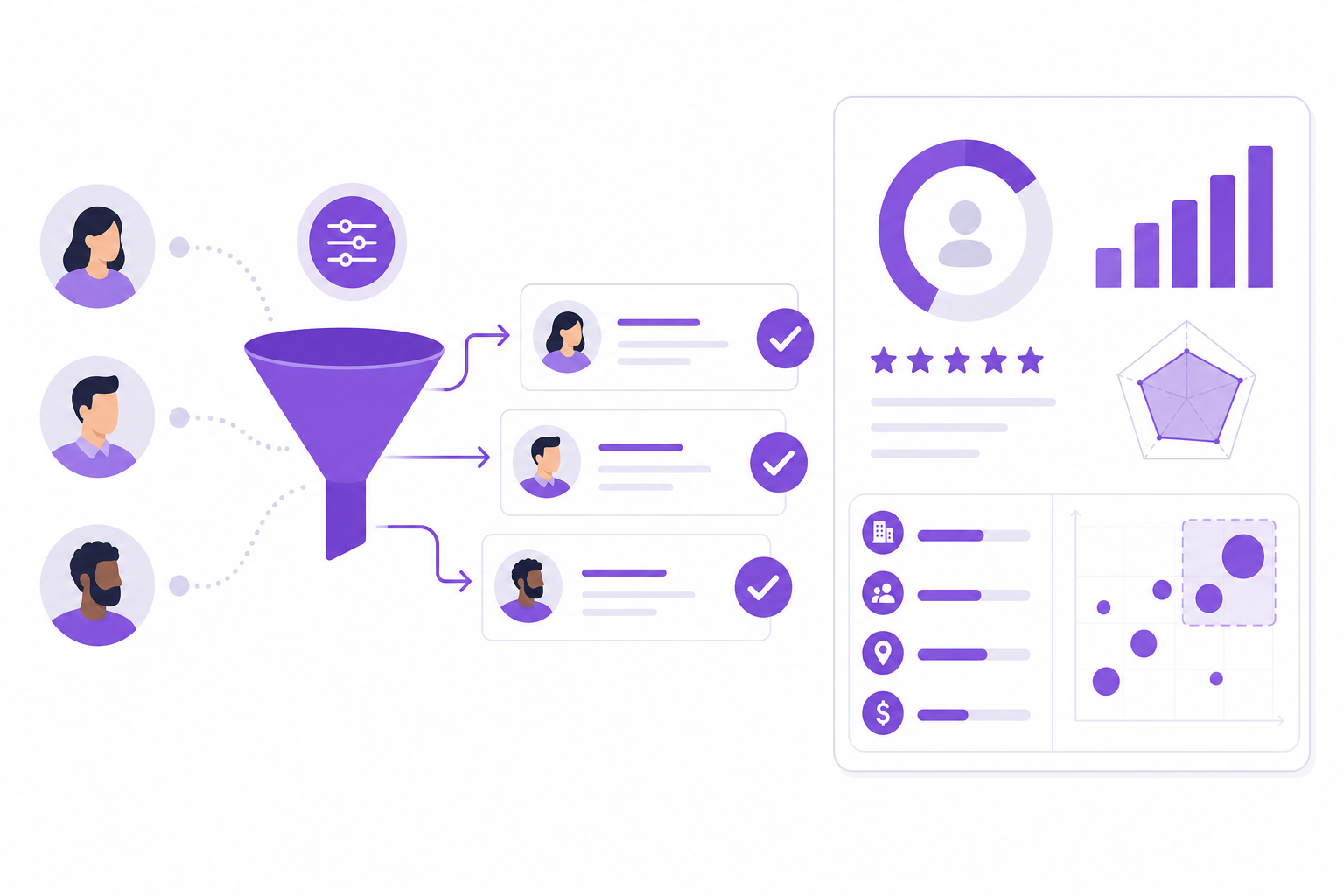
A qualified B2B lead is a prospect that meets three conditions simultaneously:
- Fit: The company matches your Ideal Customer Profile (industry, size, geography, use case)
- Intent or need: There is a realistic reason they would buy now or in the near term
- Access: You can reach a decision-maker or strong influencer with verified contact data
Unqualified leads fail on at least one dimension. A perfect-fit company with no budget authority is not qualified. A motivated buyer at a company outside your ICP wastes sales time. Teams that define qualification criteria upfront avoid pipeline inflation and improve forecast accuracy.
Why Qualified Lead Sourcing Matters More Than Lead Volume
Sales leaders often measure SDR output by emails sent or calls made. High-activity, low-quality prospecting creates a false sense of progress. The real metrics are meetings booked, opportunities created, and revenue influenced.
Teams focused on qualified leads consistently outperform volume-driven teams because:
- Account executives spend time on deals they can win
- Reply rates and meeting show rates improve
- Sales cycles shorten when buyers already match the solution
- CRM data stays clean instead of cluttered with dead ends
- Marketing and sales alignment improves around shared ICP criteria
Read top B2B lead generation mistakes to see what happens when qualification is skipped.
Step 1: Define Your Ideal Customer Profile
Every qualified lead search starts with ICP clarity. Without it, reps default to gut instinct or generic lists. Your ICP should specify:
- Target industries and sub-verticals
- Company size (employees, revenue, locations)
- Geography and market segments
- Technology stack or operational characteristics
- Buying triggers (growth, compliance, competitive pressure)
- Disqualifiers (industries, company types, deal sizes you avoid)
Build your ICP with how to build an ideal customer profile, ICP identification guide, and AI ICP Generator explained.
Step 2: Map Your Lead Sourcing Channels
Modern sales teams do not rely on a single channel. They combine inbound signals, outbound research, and intent data to build a balanced sourcing mix.
Inbound and Content-Driven Leads
Website forms, demo requests, content downloads, and webinar registrations produce leads that self-identify interest. Qualify these quickly against ICP—many inbound leads are students, competitors, or wrong-fit companies exploring casually.
Outbound Prospecting Lists
SDRs build targeted lists from databases, LinkedIn, industry directories, and AI discovery tools. Outbound gives control over who enters pipeline but requires rigorous verification. Follow best B2B prospecting workflow for a structured approach.
Referrals and Partner Channels
Customer referrals and partner introductions often produce the highest-converting leads. Systematize referral asks after wins and nurture partner relationships for warm introductions.
Intent and Signal Data
Intent platforms surface companies researching topics related to your solution. Combine intent signals with ICP fit to prioritize outreach to accounts showing active buying behavior.
Events and Communities
Trade shows, conferences, and industry communities generate relationship-based leads. Capture contacts in CRM immediately with context notes—not business cards in a drawer three months later.
Step 3: Identify Decision-Makers and Influencers
A qualified company without the right contact is not actionable. Map the buying committee typical for your deal size:
- Economic buyer: Controls budget (VP, C-suite, owner)
- Champion: Internal advocate who drives evaluation
- Technical evaluator: Assesses fit, integration, security
- End user: Daily user whose adoption affects renewal
- Procurement: Negotiates terms on larger deals
For SMB deals, one person may wear multiple hats. For enterprise, you need multi-threaded outreach. See finding B2B decision-makers and how AI finds decision-makers.
Step 4: Verify Contact and Company Data
Bad data destroys outbound credibility. Bounced emails hurt domain reputation. Wrong phone numbers waste dial time. Before any campaign:
- Verify email addresses (format, deliverability, role-based vs. personal)
- Confirm the person still works at the company
- Cross-check company details (size, industry, location)
- Remove duplicates and merged records from CRM
Verification is non-negotiable for scaled outreach. Read how to verify B2B leads before outreach and verify leads before outreach.
Step 5: Score and Prioritize Leads
Not every ICP-fit account deserves equal effort today. Lead scoring ranks prospects by likelihood to convert. Common scoring dimensions include:
- Firmographic fit (industry, size, geography)
- Behavioral signals (website visits, content engagement, email opens)
- Intent data (topic research, competitor comparisons)
- Timing triggers (funding, hiring, leadership changes)
- Engagement level (replies, meeting attendance)
A-tier leads get immediate AE or senior SDR attention. B-tier leads enter nurture sequences. C-tier leads are monitored or deprioritized. Learn how AI qualifies B2B leads automatically for scalable scoring.
Step 6: Run Structured Qualification Conversations
When a prospect responds, qualification moves from data to dialogue. Frameworks like BANT (Budget, Authority, Need, Timeline) and MEDDIC (Metrics, Economic buyer, Decision criteria, Decision process, Identify pain, Champion) give reps consistent qualification language.
Key questions to establish qualification:
- What problem are you trying to solve, and why now?
- Who else is involved in this decision?
- What does success look like in 6–12 months?
- What is your typical evaluation and procurement process?
- Have you evaluated similar solutions before?
Document answers in CRM. Incomplete qualification at handoff is the top reason opportunities stall. Deep dive in lead qualification process.
Step 7: Hand Off Qualified Leads to Account Executives
SDR-to-AE handoff should include:
- ICP fit confirmation and lead score
- Contact roles and relationship map
- Discovery notes and pain points identified
- Timeline and budget signals (if known)
- Outreach history and engagement context
- Recommended next step (demo, technical review, proposal)
Define SLA between SDR and AE for acceptance or rejection of SQLs. Rejected leads should include feedback so SDRs refine targeting.
How AI Accelerates Qualified Lead Discovery
AI does not replace sales judgment—it compresses research time so reps focus on conversations. In 2026, AI helps sales teams:
- Discover companies matching ICP across large databases
- Identify and verify decision-maker contacts
- Score leads based on fit and intent signals
- Enrich accounts with firmographic and technographic data
- Draft personalized outreach using company context
- Prioritize daily prospecting queues automatically
SDR teams using AI report reclaiming 10–15 hours per week previously spent on manual research. See how SDR teams save time with AI and AI workflow for sales teams.
Qualified Lead Sourcing Channels Compared
| Channel | Strengths | Limitations |
|---|---|---|
| AI-powered discovery | Speed, ICP filtering, scale | Requires verification and human follow-up |
| LinkedIn Sales Navigator | Decision-maker access, social context | Time-intensive, connection limits |
| Inbound marketing | Buyer-initiated, higher intent | Slow to build, needs content investment |
| Intent data platforms | Timing signals, account prioritization | Can be noisy without ICP filtering |
| Referrals | High trust, fast conversion | Unpredictable volume |
| Purchased lists | Quick volume | Often outdated, low reply rates, compliance risk |
Compare tools in AI sales prospecting tools compared and AI vs. manual prospecting.
Weekly Qualified Lead Generation Routine
High-performing sales teams run predictable weekly rhythms:
- Monday: Review pipeline, prioritize A-tier accounts, plan outreach
- Tuesday–Wednesday: Outbound blocks—calls, emails, LinkedIn
- Thursday: List building, research, AI prospect generation
- Friday: Qualification calls, CRM hygiene, KPI review, handoffs
Consistency beats sporadic prospecting sprints. Block calendar time for sourcing and protect it from internal meetings.
KPIs for Qualified Lead Generation
Track metrics that reflect lead quality, not just activity:
- Qualified leads added per rep per week
- ICP fit rate of new leads (% matching criteria)
- Email reply rate and positive reply rate
- Meetings booked per 100 outreach attempts
- SQL acceptance rate by AE
- Opportunity conversion rate from SQL
- Average sales cycle length by lead source
- Cost per qualified lead by channel
Review weekly with sales leadership. Reallocate effort to channels and segments that produce qualified pipeline. See building a predictable B2B sales pipeline.
Common Mistakes When Finding Qualified Leads
- Prospecting without a documented ICP
- Measuring emails sent instead of meetings booked
- Skipping verification before high-volume outreach
- Targeting titles instead of buying roles
- Handing off leads without qualification notes
- Ignoring inbound lead ICP filtering
- Chasing every intent signal without fit scoring
- Abandoning channels after one failed campaign
Fixing these mistakes often improves results without increasing headcount or budget.
Frequently Asked Questions
How do sales teams find qualified leads in 2026?
Sales teams find qualified leads by defining an ICP, sourcing prospects through inbound, outbound, referrals, and intent data, verifying contacts, scoring by fit and engagement, running qualification conversations, and handing off SQLs to account executives with complete context.
What is the difference between a lead and a qualified lead?
A lead is any potential contact. A qualified lead matches your ICP, has identifiable need or intent, and includes reachable decision-makers. Qualification filters leads down to prospects worth active sales effort.
How many qualified leads does a B2B sales rep need per month?
It varies by deal size and sales cycle. SDRs typically target 10–20 qualified meetings per month. AEs may need 3–8 active qualified opportunities per quarter for mid-market deals. Track conversion rates to set realistic targets.
Is AI necessary for finding qualified B2B leads?
Not mandatory, but highly advantageous. AI accelerates company discovery, contact identification, and lead scoring—allowing smaller teams to source qualified leads across more accounts than manual research alone.
What is a good reply rate for qualified lead outreach?
For well-targeted B2B outreach to verified ICP-fit contacts, 5–12% reply rates are achievable. Positive reply rates of 2–5% indicate strong targeting and messaging. Below 1% usually signals list quality or personalization issues.
Final Thoughts
How sales teams find qualified leads has evolved—but the principle remains unchanged: precision beats volume. Teams that invest in ICP definition, multi-channel sourcing, verification, scoring, and structured qualification build pipeline that converts instead of pipeline that inflates forecasts.
Start with clarity on who you sell to. Build repeatable sourcing routines. Use AI to reclaim research time. Measure quality metrics, not just activity. The qualified leads your team needs are already in the market—the system you build determines how efficiently you find them.
Ready to source qualified B2B leads faster? Get started with Adsaga.ai or explore more sales guides on the Adsaga blog.
How Adsaga.ai Helps Sales Teams Find Qualified Leads
Adsaga.ai is built for B2B sales teams that need ICP-fit prospects—not generic contact dumps. The platform uses AI to discover companies matching your criteria and identify verified decision-makers ready for outreach.
With Adsaga.ai, sales teams can:
- Discover qualified B2B companies by industry, size, and geography
- Find verified procurement, operations, and executive decision-makers
- Build ICP-scored prospect lists ready for SDR outreach
- Reduce manual research time by 60% or more
- Improve email targeting, reply rates, and meeting booking rates
- Scale qualified lead generation without linear headcount growth
Pair the framework in this guide with Adsaga.ai to find qualified leads with greater speed and precision. Try Adsaga.ai and transform how your sales team sources pipeline in 2026.