
Wholesale buyers are the volume engines of export sales — purchasing in bulk, reselling through retail or B2B channels, and generating the repeat orders that sustain international revenue. Yet most exporters struggle to identify which companies actually buy wholesale and how to reach the buyers who control purchasing budgets.
Unlike end consumers, wholesale buyers operate behind business procurement processes, import regulations, and established supplier relationships. Finding them requires targeted prospecting, not mass email blasts to generic company lists.
This guide shows how to find wholesale buyers for export products in 2026 — covering buyer types, prospecting channels, AI-powered discovery, outreach strategies, and qualification frameworks that turn contacts into consistent orders.
Related guides: finding distributors worldwide, how exporters find overseas buyers, and export prospecting step by step. For B2B fundamentals, see B2B lead generation and ICP-based lead generation.
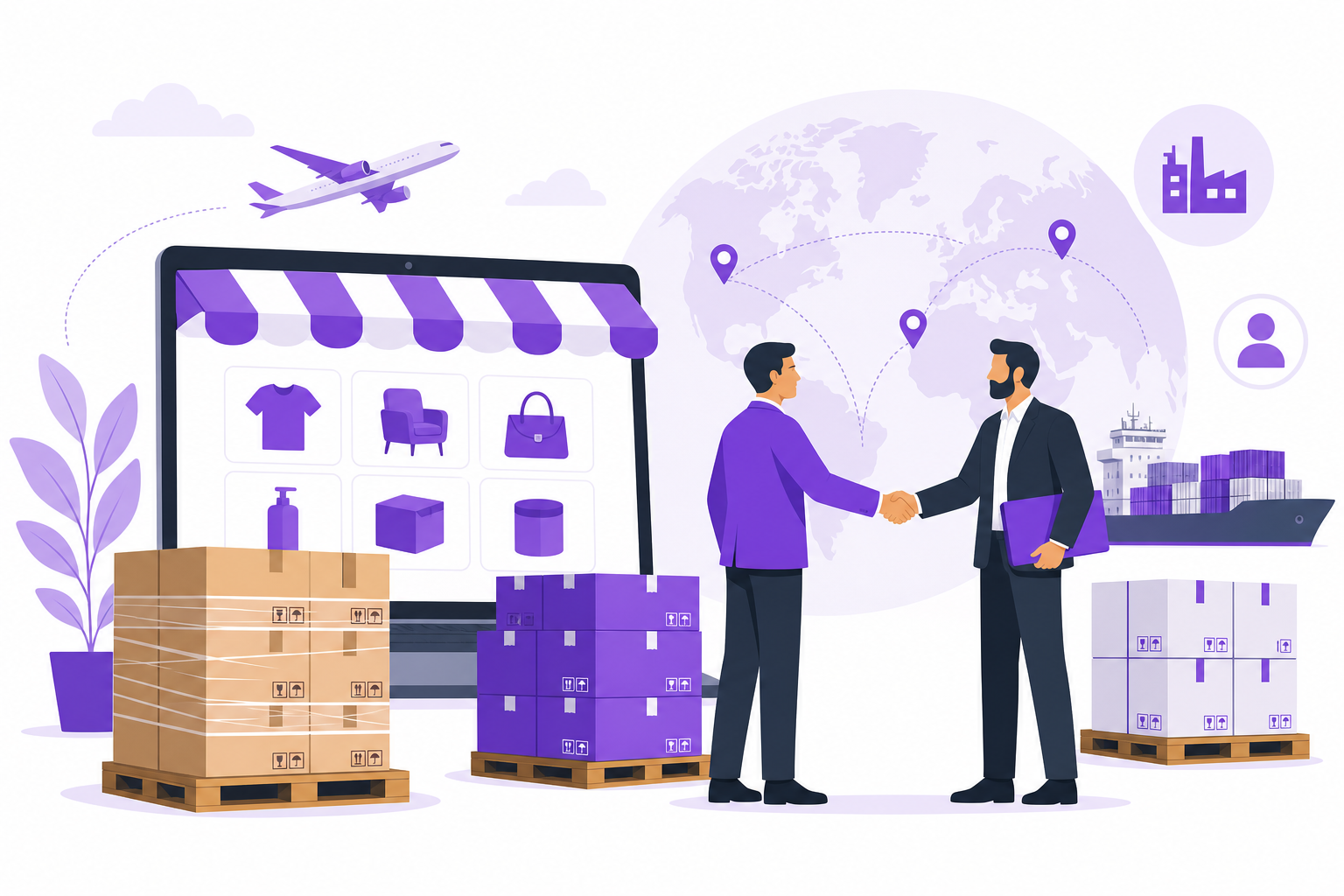
Who Are Wholesale Buyers in Export Markets?
Wholesale buyers purchase products in large quantities for resale — to retailers, other businesses, institutions, or through their own B2B platforms. In export contexts, wholesale buyers include:
- Wholesale distributors: Companies that buy from manufacturers and supply retail chains
- Cash-and-carry operators: Warehouse clubs serving small businesses and restaurants
- B2B marketplace buyers: Platforms that aggregate wholesale demand
- Retail chain procurement: Central buying offices for multi-store retailers
- Food service distributors: Suppliers to hotels, restaurants, and catering companies
- Industrial supply wholesalers: MRO and component distributors serving factories
- E-commerce wholesalers: Online B2B platforms buying for resale on marketplaces
Each buyer type has different volume expectations, margin requirements, and decision-making processes. Segment your prospecting accordingly.
Wholesale Buyer vs. Distributor vs. Retailer
Understanding channel roles prevents wasted outreach:
- Wholesaler: Buys bulk, resells to businesses — may or may not hold long-term inventory
- Distributor: Holds inventory, provides market development and dealer support — see finding distributors worldwide
- Retailer: Sells to end consumers — typically buys through wholesalers or distributors, not directly from exporters
- Importer: Brings goods into a country — may function as wholesaler or feed distribution networks
For most exporters, wholesale buyers and distributors represent the highest-volume channel partners. Retailers are usually reached indirectly through these intermediaries.
Define Your Wholesale Buyer ICP
Before prospecting, define exactly which wholesale buyers you want to reach:
- Product category: Specific segments, SKUs, and quality tiers
- Order volume: Minimum and target order quantities per shipment
- Geography: Countries and regions with wholesale demand
- Buyer type: Food service, industrial, fashion, electronics, etc.
- Company size: Revenue, warehouse capacity, number of outlets served
- Payment terms: Advance, LC, net-30, or consignment
- Decision-maker: Procurement manager, category buyer, purchasing director, owner
A precise ICP separates active wholesale buyers from companies that only purchase small retail quantities. Use our ICP identification guide to build yours.
8 Channels to Find Wholesale Buyers for Export Products
1. AI-Powered Wholesale Buyer Discovery
AI platforms analyze business databases to identify companies matching your wholesale buyer profile — filtering by industry, company size, geography, and import activity.
AI lead generation software for exporters and dedicated AI tools to find importers help you:
- Discover wholesale companies actively importing your product category
- Identify purchasing decision-makers with verified contact details
- Score prospects by ICP fit before outreach
- Build segmented lists for multi-country campaigns
AI compresses weeks of manual directory research into hours — the most scalable channel for wholesale buyer prospecting in 2026.
2. Customs and Trade Import Data
Trade data shows which companies actually import goods in your HS code category, shipment volumes, and origin countries. This is the strongest signal that a company is an active wholesale buyer — not just a business that might theoretically purchase.
Combine import records with company enrichment to add decision-maker contacts, firmographics, and email verification.
3. Industry Wholesale Directories and Trade Associations
Industry-specific directories list established wholesale buyers — food service distributors, textile wholesalers, chemical distributors, and more. Trade association member lists reveal active market participants.
Directory data goes stale quickly. Always verify contacts and cross-reference with AI prospecting for current information.
4. B2B Marketplaces and Wholesale Platforms
Platforms like Faire, Alibaba, Global Sources, and industry-specific B2B marketplaces connect exporters with wholesale buyers. Inbound marketplace listings generate inquiries, but outbound prospecting to buyers on these platforms accelerates results.
Optimize your marketplace profile with certifications, product specifications, and MOQ details that wholesale buyers need for sourcing decisions.
5. LinkedIn Prospecting for Purchasing Teams
LinkedIn enables direct access to wholesale purchasing decision-makers:
- Search by title: "Category Manager," "Procurement Director," "Purchasing Manager," "Sourcing Manager"
- Filter by company industry and geography
- Reference their product category and sourcing needs in outreach
- Share industry insights to build credibility before pitching
See our decision-maker prospecting guide for advanced targeting.
6. Trade Shows and Wholesale Buyer Events
Industry trade shows attract wholesale buyers actively seeking new suppliers. Pre-show prospecting — building attendee lists and scheduling meetings — maximizes ROI from exhibition investment.
Wholesale-focused events like food service expos, fashion trade shows, and industrial supply fairs generate high-intent leads when followed up systematically.
7. Referrals from Existing Wholesale Customers
Satisfied wholesale buyers often know competitors, adjacent market buyers, and regional partners who might source similar products. Structure referral incentives and ask directly after successful shipments.
One strong wholesale relationship can cascade into introductions across an entire regional market.
8. Content Marketing and SEO for Inbound Wholesale Leads
Publishing content that wholesale buyers search for — "organic food wholesalers Europe," "textile bulk suppliers," "industrial component sourcing" — generates inbound inquiries year-round.
Pair SEO content with lead capture forms and CRM integration so inbound wholesale interest enters your pipeline alongside outbound prospects.
How to Qualify Wholesale Buyers
Not every company that expresses interest is a qualified wholesale buyer. Qualify prospects before investing in samples, pricing negotiations, or compliance documentation:
Volume and Order Fit
- Do they purchase at wholesale volumes (not single-carton orders)?
- Does their order frequency match your production capacity?
- Can they meet your minimum order quantities?
Financial Stability
- Company age, revenue, and credit references
- Payment terms they're accustomed to and willing to accept
- History of paying international suppliers on time
Market Position
- Who do they sell to — retail chains, independent stores, B2B clients?
- Geographic coverage and customer base size
- Competitive brands they already carry
Regulatory and Compliance Fit
- Import licenses and product registration in their market
- Required certifications (FDA, CE, organic, halal, etc.)
- Ability to handle customs clearance and logistics
Qualification protects your team from price shoppers, unqualified inquiries, and buyers who can't sustain repeat orders. Learn more in how AI qualifies B2B leads.
Outreach Strategies for Wholesale Buyers
Wholesale buyers receive dozens of supplier pitches weekly. Stand out with:
Product-Led Messaging
Lead with specific product advantages — quality certifications, competitive pricing at volume, unique specifications, or supply reliability — not generic company introductions.
Volume Pricing Transparency
Wholesale buyers need pricing tiers, MOQs, and lead times upfront. Provide clear price lists or tier structures in your initial outreach to accelerate evaluation.
Social Proof and References
Reference existing wholesale customers in similar markets, shipment volumes, and satisfaction metrics. Wholesale buyers trust suppliers with proven track records.
Multi-Touch Follow-Up
Run 5–8 touch sequences across email, LinkedIn, and phone over 3–4 weeks. Wholesale purchasing cycles involve multiple stakeholders — persistence is essential.
Verify all contacts before sending. Read how to verify B2B leads before outreach to maintain deliverability.
Wholesale Buyer Prospecting by Industry
Different industries have distinct wholesale buyer landscapes:
- Textile exporters — fashion wholesalers, fabric distributors, apparel buying offices
- Chemical exporters — industrial chemical distributors, specialty chemical wholesalers
- Pharmaceutical manufacturers — pharma wholesalers, hospital procurement, government tenders
- Packaging companies — FMCG supply chain buyers, co-packing wholesalers
- Industrial equipment — MRO distributors, factory supply wholesalers
- Plastic manufacturers — polymer distributors, packaging material wholesalers
Tailor your prospecting channels and messaging to each industry's wholesale buying behavior.
Building a Wholesale Buyer Pipeline
Sustainable wholesale revenue requires pipeline discipline:
- Prospect continuously: Add 20–50 new wholesale buyer prospects weekly using AI and trade data
- Segment by stage: Identified, contacted, engaged, sampling, quoting, negotiating, active account
- Track reorder patterns: Monitor purchase frequency and flag accounts going quiet
- Nurture long-cycle accounts: Wholesale relationships take months to establish — maintain touchpoints
- Review pipeline weekly: Prioritize high-ICP-fit accounts with recent engagement signals
See how to build a predictable B2B sales pipeline and export lead generation strategies for pipeline frameworks.
Common Mistakes When Prospecting Wholesale Buyers
- Targeting retailers instead of wholesalers — retailers buy through intermediaries
- Hiding pricing until late stages — wholesale buyers need volume pricing early
- Ignoring MOQ alignment — pitching container loads to buyers who order pallets
- Single-channel outreach — email only, without LinkedIn or trade show follow-up
- No qualification process — wasting samples and quotes on unqualified inquiries
- Stale contact data — directories from years ago with bounced emails
Frequently Asked Questions
How do exporters find wholesale buyers internationally?
Exporters use AI-powered buyer discovery, customs import data, industry directories, B2B marketplaces, LinkedIn prospecting, trade shows, and customer referrals to identify and contact wholesale buyers in target markets.
What is the difference between a wholesale buyer and a distributor?
Wholesale buyers purchase in bulk for resale, often without deep market development obligations. Distributors hold inventory, manage sales teams, and invest in brand building within defined territories — typically under formal distribution agreements.
Can AI help find wholesale buyers for export products?
Yes. AI platforms identify companies importing your product category, filter by wholesale-relevant company size and industry, surface purchasing decision-makers, and score prospects by ICP fit — dramatically reducing manual research time.
What information do wholesale buyers need from exporters?
Product specifications, volume pricing tiers, MOQs, lead times, certifications, sample availability, payment terms, shipping options, and references from existing wholesale customers in similar markets.
How long does it take to close a wholesale export buyer?
Initial engagement typically occurs within 4–8 weeks of outreach. First orders often take 2–6 months depending on sampling, compliance documentation, and internal approval processes. Repeat orders follow faster once the relationship is established.
Final Thoughts
Wholesale buyers drive the volume that makes export businesses sustainable. Finding them requires targeted prospecting — not mass outreach to random companies — combined with clear qualification, transparent pricing, and persistent follow-up.
Use AI tools and trade data to identify active wholesale buyers, define your ICP precisely, and build a pipeline that generates both first orders and long-term reorder relationships.
For more export growth strategies, explore export prospecting, AI for export sales, and guides on the Adsaga blog.
How Adsaga.ai Helps Exporters Find Wholesale Buyers
Adsaga.ai is built for exporters who need qualified wholesale buyers and bulk purchasing contacts — not outdated directories or unverified lists.
By analyzing your Ideal Customer Profile, Adsaga.ai identifies companies that match your product category, order volume requirements, and target markets.
With Adsaga.ai, export teams can:
- Discover wholesale buyers and bulk importers worldwide
- Find verified purchasing and procurement decision-makers
- Build segmented prospect lists by country, industry, and buyer type
- Prioritize high-fit accounts using AI-powered scoring
- Reduce manual research and accelerate outreach campaigns
- Scale wholesale buyer prospecting across multiple markets
From textiles to chemicals, food products to industrial equipment — Adsaga.ai helps your export team connect with wholesale buyers ready to place volume orders. Get started with Adsaga.ai and grow your wholesale export revenue.