
Finding international buyers is no longer optional for exporters—it is the foundation of sustainable growth. In 2026, the exporters winning new markets are not simply attending more trade fairs or buying larger contact lists. They are building structured, repeatable export lead generation strategies that combine market intelligence, verified buyer data, and consistent outreach.
Whether you export textiles, chemicals, pharmaceuticals, food products, engineering goods, machinery, plastics, steel, packaging, or industrial equipment, the same challenge applies: how do you generate qualified overseas leads predictably?
This guide covers proven export lead generation strategies that work in 2026—from defining your Ideal Customer Profile to using AI for international prospecting, distributor outreach, and pipeline management.
For foundational concepts, see our guides on B2B lead generation, ICP identification, and how exporters find overseas buyers.
What Is Export Lead Generation?
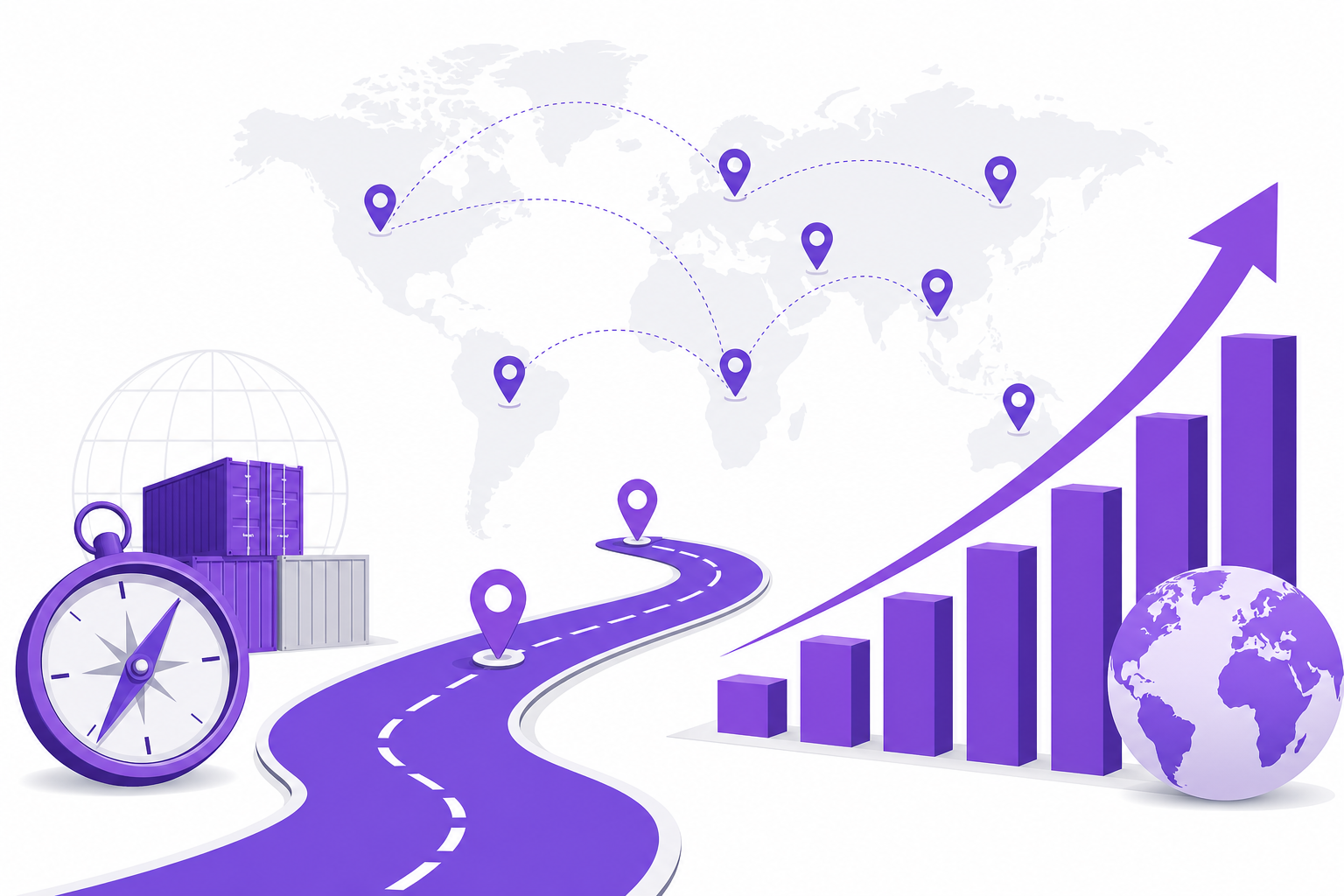
Export lead generation is the process of identifying and engaging businesses in foreign markets that are likely to import, distribute, or resell your products. Unlike domestic B2B sales, export lead generation must account for:
- Country-specific regulations and certifications
- Import duties and logistics requirements
- Cultural differences in business communication
- Currency, payment terms, and trade finance
- Competition from local and regional suppliers
- Longer sales cycles and relationship-building
A strong export lead generation strategy connects your products with the right international buyers—importers, distributors, wholesalers, retailers, and procurement teams—before competitors reach them.
Why Traditional Export Lead Generation Falls Short
Many exporters still rely heavily on:
- International trade exhibitions
- B2B marketplaces and listing platforms
- Purchased buyer databases
- Buying agents and intermediaries
- Referrals from existing customers
- Generic cold email campaigns
These methods can produce results, but they often create problems such as:
- Outdated or unverified contact information
- Low reply rates from generic outreach
- High cost per qualified lead
- Unpredictable pipeline volume
- Difficulty scaling into new countries
- Sales teams spending more time researching than selling
In 2026, exporters need strategies that are measurable, repeatable, and aligned with how international buyers actually source suppliers. Learn more in our guide to lead generation tools for export business.
What Makes a High-Quality Export Lead?
Not every company in your target country is a viable customer. A qualified export lead typically includes:
- Company name and verified website
- Country and target market focus
- Industry and product category relevance
- Import or distribution activity
- Company size and estimated revenue
- Decision-maker names and roles
- Verified business email addresses
- LinkedIn profiles for key contacts
- Ideal Customer Profile (ICP) fit score
Better lead quality improves reply rates, shortens sales cycles, and reduces wasted effort on prospects that will never convert. See our guide to finding qualified B2B leads and lead verification best practices.
12 Export Lead Generation Strategies That Work in 2026
1. Define Your Ideal Customer Profile (ICP) First
Before prospecting, clarify exactly who you want to reach. Your export ICP should specify:
- Product categories you export
- Target countries and regions
- Buyer type (importer, distributor, wholesaler, retailer, OEM)
- Company size and purchase volume
- Certifications or compliance requirements
- Distribution model and channel strategy
A clear ICP eliminates low-fit prospects and improves campaign performance. Use our ICP identification guide and AI ICP Generator overview to build yours faster.
2. Segment Target Markets by Country and Region
Rather than blasting the same message worldwide, prioritize markets where demand, regulations, and competition align with your strengths. High-potential export destinations in 2026 include:
- United States
- Germany, United Kingdom, France, Netherlands
- Canada and Australia
- UAE and Saudi Arabia
- Singapore and Southeast Asia
- South Africa and select African markets
For region-specific tactics, see how to find USA buyers and how to find Europe importers.
3. Target Verified Decision-Makers
Export deals rarely close through generic info@ email addresses. Focus outreach on professionals responsible for sourcing and procurement:
- Procurement Manager
- Purchase Manager
- Sourcing Manager
- Import Manager
- Category Manager
- Supply Chain Director
- Operations Manager
- CEO or Founder (for SMEs)
Learn how to find and verify these contacts in our decision-maker prospecting guide and how AI finds B2B decision-makers.
4. Use AI to Discover International Buyers
AI-powered prospecting helps exporters identify companies that match their ICP across multiple countries—without spending days on manual research. Modern platforms can:
- Surface importers and distributors by product category
- Score prospects based on ICP fit
- Enrich company profiles with firmographic data
- Identify verified decision-maker contacts
- Prioritize high-potential opportunities
Explore AI lead generation software for exporters and AI tools to find importers for a deeper look.
5. Build Distributor and Wholesaler Pipelines
Many exporters grow faster through channel partners than direct retail sales. Dedicated strategies for partner acquisition include:
- Mapping distributors by territory and product line
- Evaluating partner financial stability and market reach
- Personalizing outreach based on their existing portfolio
- Offering exclusive territory or margin structures
See our dedicated guides on finding distributors worldwide and finding wholesale buyers.
6. Personalize Export Outreach by Market
International buyers receive hundreds of supplier emails. Stand out by referencing:
- Their product range and target customers
- Import categories relevant to your offering
- Market trends in their country
- Certifications you hold that matter locally
- How your pricing or MOQ fits their business model
Personalized communication builds credibility and increases engagement across email and LinkedIn.
7. Combine Trade Fairs with Proactive Prospecting
Trade exhibitions remain valuable—but they work best as part of a broader strategy. Before and after each fair:
- Pre-book meetings with target buyers using verified contact data
- Follow up within 48 hours with personalized messages
- Add new contacts to segmented nurture sequences
- Track which events produce qualified pipeline, not just business cards
Do not let exhibition leads go cold. Integrate fair contacts into your ongoing export prospecting workflow.
8. Leverage Content and SEO for Inbound Export Leads
Publishing useful content helps buyers find you when they search for suppliers. Effective topics include:
- Product sourcing guides by category
- Export compliance and certification explainers
- Country-specific import requirements
- Case studies with international clients
- Technical specifications and application notes
Inbound leads often convert at higher rates because buyers are already actively sourcing.
9. Implement a Structured Follow-Up System
Most international buyers do not respond to the first email. A proven follow-up sequence might include:
- Introduction with value proposition
- Product catalog or technical datasheet
- Company profile and export credentials
- Case study or reference customer
- Sample offer or virtual meeting invitation
- Final check-in before pausing outreach
Consistent follow-up dramatically improves conversion without increasing prospecting volume.
10. Verify Leads Before Outreach
Bad data wastes time and damages sender reputation. Before launching campaigns, verify:
- Company still operates at the listed address
- Email addresses are valid and deliverable
- Contact still holds the stated role
- Company profile matches your ICP criteria
Verification protects domain health and improves reply rates. Read how to verify B2B leads before outreach.
11. Track KPIs and Optimize Campaigns
Measure export lead generation performance with clear metrics:
- Qualified prospects identified per week
- Email open, reply, and meeting rates by country
- Cost per qualified lead by channel
- Pipeline value by market segment
- Conversion from first contact to quotation
- Win rate by buyer type and product line
Data-driven optimization helps you double down on what works. See how to build a predictable B2B sales pipeline.
12. Automate Research, Not Relationships
AI and automation should handle repetitive tasks—buyer discovery, data enrichment, list building, and initial scoring—so your team can focus on:
- Buyer meetings and negotiations
- Product presentations and samples
- Relationship building across time zones
- Closing long-term distribution agreements
The best export teams in 2026 use technology to scale prospecting while keeping human touchpoints where they matter most. Learn more in AI for export sales.
How to Build a Repeatable Export Lead Generation Process
A modern export lead generation workflow typically follows these steps:
- Define your Ideal Customer Profile and target markets
- Identify buyer segments (importers, distributors, wholesalers)
- Discover qualified companies using AI and trade intelligence
- Find and verify decision-maker contacts
- Score and prioritize prospects by ICP fit
- Craft personalized outreach by country and segment
- Execute multi-touch follow-up sequences
- Track responses and move qualified leads into pipeline
- Review performance and refine targeting monthly
This structured approach turns ad-hoc buyer hunting into a scalable growth engine. For a step-by-step walkthrough, see our export prospecting guide and B2B sales prospecting guide.
Export Lead Generation by Industry
While core principles apply across sectors, buyer types and messaging vary by product category. Industry-specific guides include:
- Textile exporters
- Chemical manufacturers
- Pharmaceutical manufacturers
- Packaging companies
- Industrial equipment suppliers
- Engineering companies
- Manufacturing companies (AI overview)
Common Export Lead Generation Mistakes to Avoid
Even experienced exporters make these errors:
- Targeting every country instead of prioritizing high-fit markets
- Using purchased lists without verification or segmentation
- Sending identical emails to importers, distributors, and retailers
- Giving up after one or two follow-ups
- Ignoring ICP definition before launching campaigns
- Measuring activity (emails sent) instead of outcomes (meetings booked)
- Relying solely on trade fairs without year-round prospecting
Avoiding these mistakes alone can significantly improve export pipeline quality.
Frequently Asked Questions
What are the best export lead generation strategies in 2026?
The most effective strategies combine ICP definition, AI-powered buyer discovery, verified decision-maker targeting, personalized multi-channel outreach, structured follow-up, and performance tracking across prioritized export markets.
How do exporters find international buyers without trade fairs?
Exporters use AI prospecting platforms, trade intelligence databases, LinkedIn outreach, content marketing, distributor mapping, and targeted email campaigns to discover importers and buyers year-round—reducing dependence on exhibitions alone.
What is the difference between an importer, distributor, and wholesaler?
Importers bring products into a country for resale or processing. Distributors manage territory-based sales and often provide logistics support. Wholesalers buy in bulk and sell to retailers or other businesses. Your ICP should specify which buyer type fits your export model.
Can AI improve export lead generation?
Yes. AI helps exporters discover qualified international buyers, identify procurement decision-makers, score ICP fit, enrich company data, and reduce manual research—allowing sales teams to focus on relationship-building and closing deals.
How long does export lead generation take to show results?
With a defined ICP and verified contacts, exporters often see initial replies within 2–4 weeks. Building a predictable pipeline typically requires 2–3 months of consistent prospecting, follow-up, and optimization across target markets.
Final Thoughts
Export lead generation in 2026 is not about collecting more company names—it is about building a systematic process to find, verify, and engage the right international buyers. Exporters who define their ICP, leverage AI for discovery, personalize outreach by market, and follow up consistently will outperform competitors still relying on outdated directories and one-off trade fair contacts.
The global market is large, but attention is scarce. Focus your effort on high-fit prospects, measure what works, and iterate. A repeatable export lead generation strategy becomes a durable competitive advantage as you enter new countries and product lines.
Start with one target market, one buyer segment, and one proven workflow—then scale what converts. Get started with Adsaga.ai or explore more export guides on the Adsaga blog.
How Adsaga.ai Helps Exporters
Adsaga.ai is an AI-powered B2B lead generation platform built to help exporters identify qualified international buyers faster and more accurately.
Instead of generic contact lists, Adsaga.ai analyzes your Ideal Customer Profile and discovers companies that match your products, industries, and target export markets.
With Adsaga.ai, exporters can:
- Discover international importers, distributors, and wholesalers
- Find verified procurement and sourcing decision-makers
- Build targeted prospect lists by country and industry
- Prioritize leads using AI-powered ICP scoring
- Reduce manual buyer research across multiple markets
- Improve outreach quality and export sales productivity
Whether you are entering your first overseas market or scaling into new regions, Adsaga.ai helps your export team focus on buyers most likely to become long-term customers. Try Adsaga.ai and pair it with the strategies in this guide for a complete 2026 export lead generation system.